

Last Updated: November 14, 2026
Quick Summary
The best grooming brushes for long haired cats depend on the coat: a slicker brush handles daily loose fur, a dematting comb breaks up knots, and a deshedding rake reaches the undercoat. Match the tool to your cat's coat texture, and use short five- to ten-minute sessions.
- The Double-Sided Dematting Comb at $15.43 suits thick, double-coated cats with heavy shedding.
- The self-cleaning slicker brush at $24.98 has a one-click button for releasing collected fur.
- Never cut mats out with scissors, since cat skin tears easily.
- Work a dematting comb from the outer edge of a mat inward in small sections.
- Check behind the ears, under the front legs, and along the belly weekly for tangles.
Table of Contents
- Quick Comparison: Top Grooming Brushes for Long-Haired Cats
- The Best Deshedding Brush for Long Hair Cats
- Why a Slicker Brush for Long-Haired Cats Is Essential
- The Best Brush for Long Hair Cats with Matted Fur
- Frequently Asked Questions
Quick Comparison: Top Grooming Brushes for Long-Haired Cats
The best grooming brushes for long haired cats depend on what your cat's coat needs: a slicker brush handles daily loose fur, a dematting comb breaks up knots, and a deshedding rake reaches the undercoat. Every pick below is stocked at Jen's Pet Supply because it solves a specific job on a long coat. Regular grooming helps cats avoid painful mats and skin irritation, and long-haired cats generally need more of it than short-haired ones.
| Brush | Price | Coat Problem It Solves | Best For |
|---|---|---|---|
| Double-Sided Dematting Comb | $15.43 | Deep mats and heavy undercoat | Thick double coats |
| Self-Cleaning Slicker Brush | $24.98 | Loose fur, light tangles | Daily upkeep |
| Spray Slicker Brush | $20.80 | Static, flyaway fur | Dry indoor coats |
| Pet Steam Brush | $31.84 | Static and gentle fur release | Sensitive cats |
| Stainless Steel Grooming Brush | $19.90 | Loose hair, massage | Everyday brushing |
Price
The Best Deshedding Brush for Long Hair Cats
The 2026 New Double-Sided Dematting Comb, priced at $15.43, is a deshedding option for long-haired cats. Its curved stainless steel teeth are designed to work through tangles and matted fur, and its rounded curved teeth are designed to glide through the coat more comfortably to help reduce tugging.
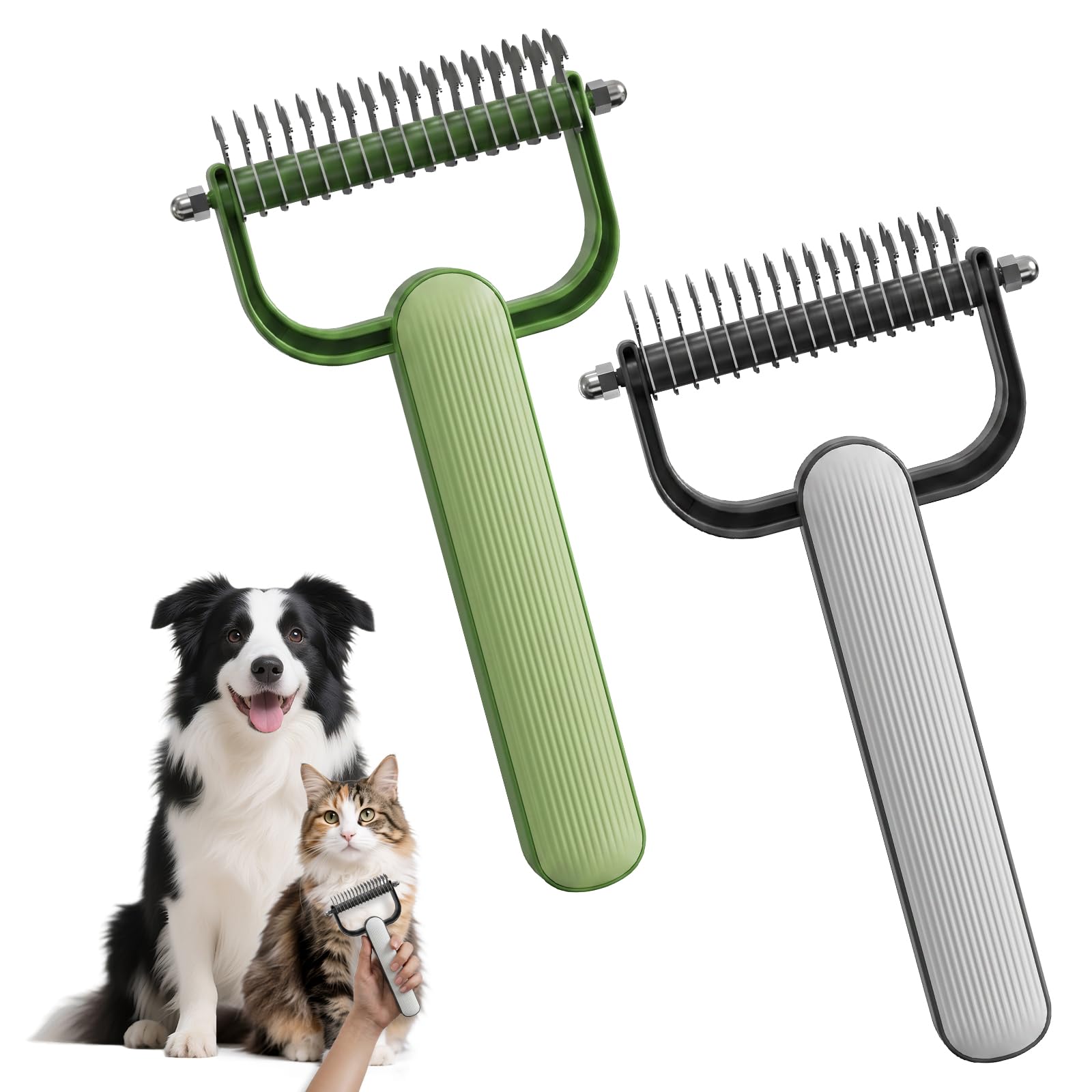
Best for: thick, double-coated and long-haired cats with heavy shedding. Skip if: your cat has very fine, thin fur with no undercoat to rake.
How an Undercoat Rake Actually Works
A deshedding tool, sometimes called an undercoat rake, has curved teeth intended to reach into the undercoat. Rounded tips that glide rather than scratch are a useful feature to look for, and a rake is generally best used as a targeted tool for dense undercoats rather than a daily tool for every cat.
Match the Tool to the Coat Texture
Long hair is not one coat type. Use this as a starting point:
- Dense double coats (Maine Coon, Siberian, Norwegian Forest Cat types): a rake plus a slicker is the core pair, the rake handles undercoat, the slicker smooths the guard coat.
- Fine, silky single coats (many Persian-type and Ragdoll-type coats): a rake can be too aggressive and pull healthy hair; lean on a slicker and a wide-toothed comb.
- Woolly coats that mat easily: a rake used lightly, plus a comb for spot checks, beats repeated slicker passes over tangles.
Unsure which category your cat falls into? Run a metal comb gently through the coat: if it glides and you see mostly long guard hairs, you likely have a lighter coat; if it drags and reveals a dense, fluffy layer underneath, you have undercoat worth raking.
A Realistic Deshedding Schedule
Groomers commonly rake the undercoat during heavy shedding seasons and less often the rest of the year, followed by a slicker pass. Five- to ten-minute sessions are usually enough; longer sessions test a cat's patience and lead to fidgeting and nicked skin. Over-raking a double coat can thin the guard coat, so stop when the tool comes away with little loose fur.
Deshedding Without Stress
Work in short strokes in the direction the coat grows, section by section, and give the cat a break between areas. After deshedding, a quick pass with a self-cleaning slicker brush at $24.98 lifts the loosened fur off the surface so it does not simply resettle. For cats that build static during dry indoor months, the spray slicker brush, see the spray slicker brush listing, helps flyaway fur lie flat after raking.
Why a Slicker Brush for Long-Haired Cats Is Essential
A slicker brush for long-haired cats is the daily workhorse: fine wire pins lift loose surface hair and smooth the outer coat before small tangles become mats. Slicker brushes can suit many coat types but are usually best paired with a comb on a long coat.
Watch out: pressing hard with any slicker irritates skin. Use light, overlapping strokes along the coat, not against it.
The Best Brush for Long Hair Cats with Matted Fur
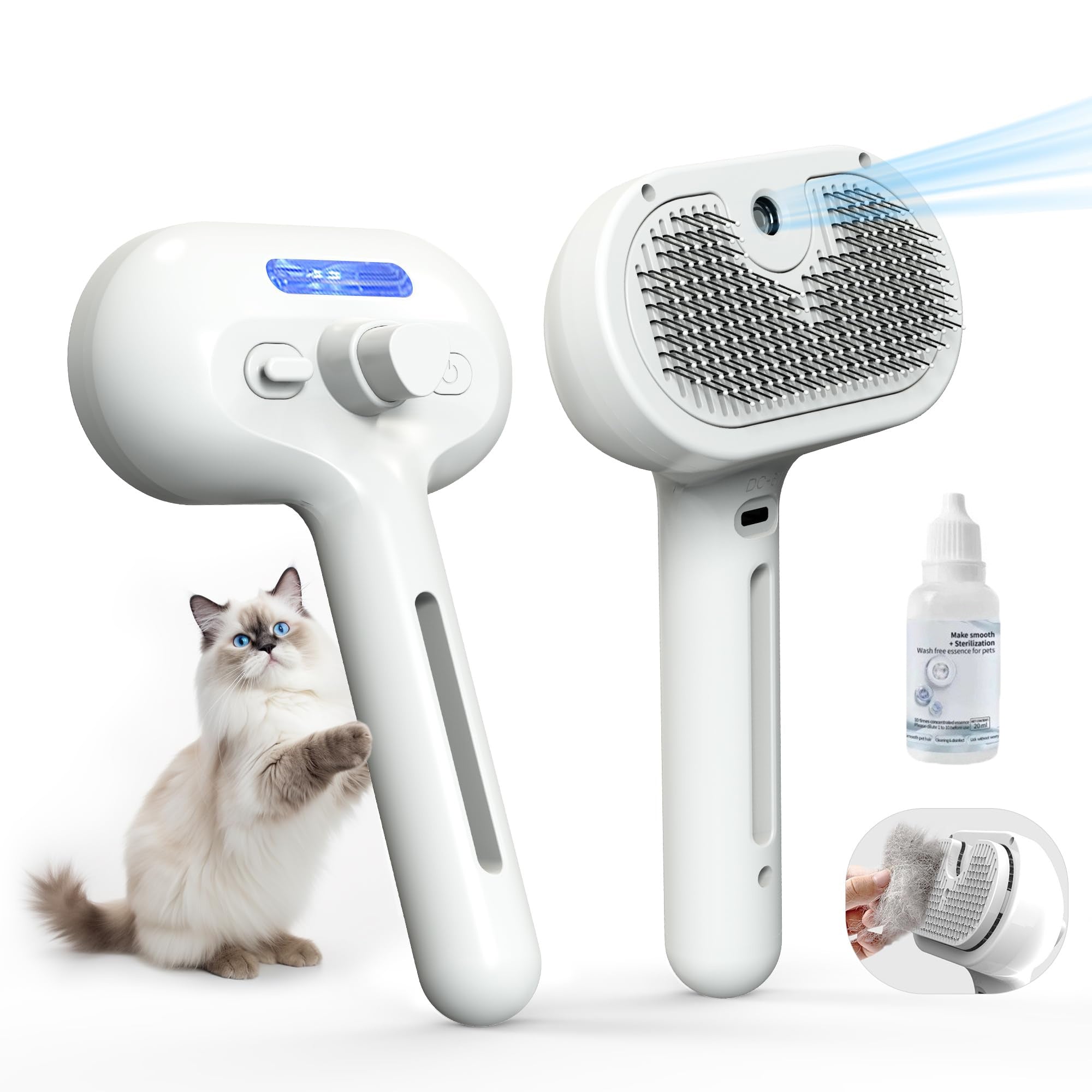
The best brush for long hair cats with matted fur is a dematting comb, not a slicker. For stubborn knots, our detangling comb at $19.99 works through problem areas, and the cool mist steam brush at $31.84 softens fur with a fine spray so it releases with less pulling.
The woman is American.
Loose Tangle vs. Tight Mat: Know the Difference Before You Pull
Most brush guides skip the step that protects the cat: deciding whether a knot is safe to work on at home. A loose tangle sits on the surface and lets a comb pass through with light resistance; a tight mat is felted against the skin, does not separate when pinched, and often hides reddened or broken skin underneath. A practical test is to hold the mat between two fingers and gently tease it apart.
A Step-by-Step Dematting Protocol
- Check the skin first. Part the coat and look for redness, scabs, or moisture; broken skin is a reason to stop and call your veterinarian.
- Hold the coat above the knot. Pinching the fur between the mat and the skin keeps tension off the skin.
- Start at the outer edge. Work the comb into the tip of the tangle and move inward in small sections.
- Work in short bursts. Cats tolerate dematting far better in 30-second increments than in one long session.
- Stop at resistance. If the comb will not pass and the cat is tensing or vocalizing, stop, forcing a comb through a tight mat is how skin tears happen.
- Follow with a slicker. A light slicker pass smooths the area and lifts freed fur.
Watch out: never cut a mat out with scissors. Cat skin is thin and loose, and it is easy to catch a fold of skin under the fur, this is one of the most common grooming injuries veterinarians see.
When to Stop and Call a Professional
Stop home dematting and seek professional help when a mat is tight against the skin, the skin underneath looks irritated or broken, mats cover a large area such as the belly, armpits, or hindquarters, or the cat is in pain or will not tolerate handling. Senior cats, overweight cats, and cats with arthritis may have difficulty grooming their own backs and hindquarters, so mats there can build up and may signal a mobility issue worth raising with your veterinarian.
Preventing the Next Mat
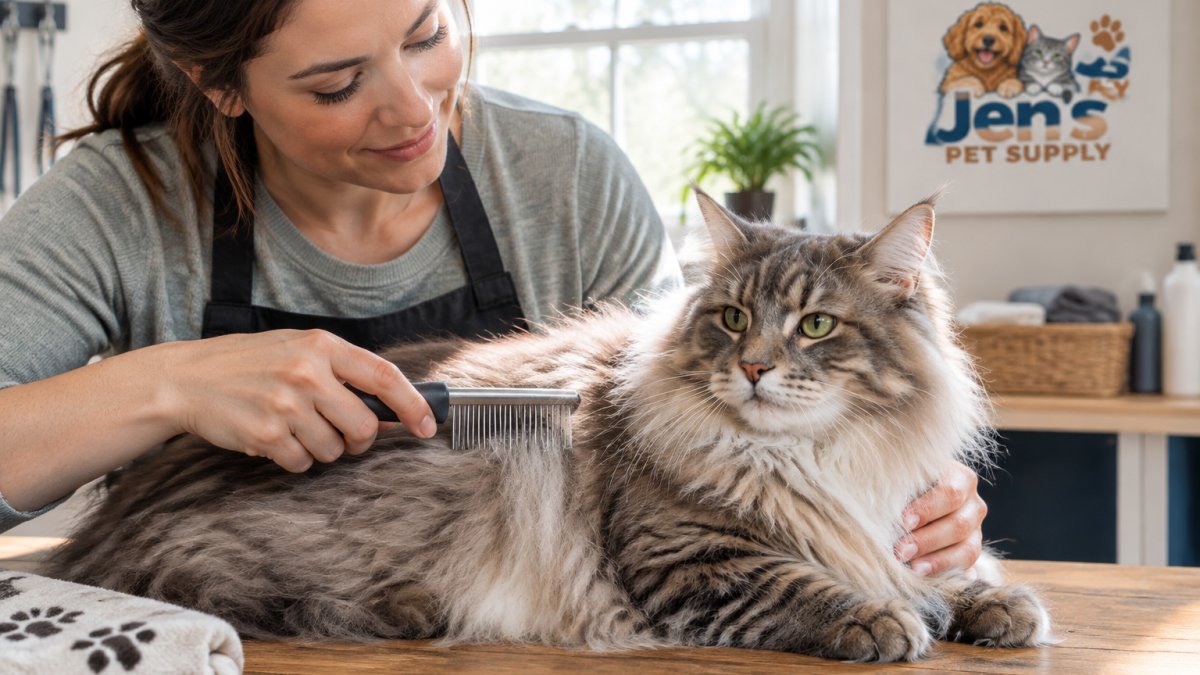
Mats form where fur rubs together, behind the ears, under the front legs, between the hind legs, and along the belly. A two-minute weekly check with a metal comb through those spots catches tangles while they are still loose, and cats that dislike full-body brushing often accept a comb in one small area at a time.
Cleaning and Maintaining Your Dematting Tools
Fur packed between the teeth reduces a comb's effectiveness and can bend the pins. After each session, pull collected fur out of the teeth, wipe the tool with a damp cloth, and let it dry before storing. Inspect the teeth periodically: bent, chipped, or rusted pins scratch skin and should mean replacing the tool. For cats that find combing uncomfortable, the cool mist steam brush at $31.84 can soften a light tangle before you reach for the comb, and the flex-head double-sided slicker at $19.99 angles with the body for cats that resist firm pressure.
Frequently Asked Questions
What type of brush is best for a cat with long fur?
A combination works best. Start with a slicker brush for long-haired cats to remove loose fur and small tangles, then follow with a stainless steel comb to check for knots near the skin. For heavy shedding, add a deshedding tool to reach the undercoat. Jen's Pet Supply carries a self-cleaning slicker brush and a double-sided dematting comb that cover both steps.
Is a slicker brush safe for long-haired cats?
Yes, when used gently. Choose a slicker with rounded pin tips to protect sensitive skin, and brush in the direction of hair growth. Avoid pressing hard or dragging through mats, which can cause irritation. A slicker brush for long-haired cats should be one part of your routine, not the only tool, since it works mainly on surface fur and light tangles.
How often should you brush a long-haired cat?
Many long-haired cats benefit from regular brushing, and more frequent brushing during seasonal shedding. A consistent routine prevents mats from forming and reduces hair around the house. Senior cats or those with mobility issues may need daily help since they groom themselves less effectively. Always be gentle and stop if your cat shows signs of discomfort.
