

Last Updated: October 31, 2026
Quick Summary
To stop dog destroying toys, reward the pause and the release before the toy is ruined, not after. Teach a drop it cue with treat trades, supervise all soft toys, and redirect shredding into durable rubber or no-stuffing outlets matched to your dog's motivation.
- Dogs rip toys apart because shredding satisfies natural instincts like chasing, biting, and dissecting prey.
- The gentle-play training plan runs four to six weeks with short daily sessions ending on success.
- Interrupt at the first still, quiet moment with the toy, before stuffing appears.
- Squeakers, stuffing, rope fibers, and plastic eyes are the most common swallowed toy parts.
- Puppies under 7 months need two-minute sessions and chilled rubber teething toys.
Table of Contents
- Why Dogs Destroy Toys: Play Drive, Boredom, and Chewing Needs
- How to Teach a Dog to Play Gently: A Gradual Training Plan
- How to Redirect Destructive Chewing to an Appropriate Toy
- Best Toys for Dogs That Destroy Toys: Match Material to Chewing Intensity
- Shop Chew Toys Built for Destructive Chewers
- Frequently Asked Questions
Why Dogs Destroy Toys: Play Drive, Boredom, and Chewing Needs
If you want to know how to stop dog destroying toys, start with the reason behind it.
Many owners buy a plush toy on Monday and sweep up its remains by Wednesday. The dog isn't being bad.
Three forces drive most toy destruction:
- Play drive: Herding and terrier breeds often "kill" toys by shaking and tearing them.
- Boredom: A dog with nothing to do invents a job, and unstuffing a toy is a satisfying one.
- Chewing needs: Puppies teethe, and adult dogs chew to relieve stress and clean their teeth.
The American Kennel Club's guide to destructive chewing notes that teething, boredom, and anxiety all push dogs toward household destruction.
A food-dispensing puzzle toy gives a bored dog a better outlet. An interactive dog toy that moves on its own can also redirect a dog's destructive energy into appropriate play.
Normal Play vs. Destructive Chewing
Normal play includes mouthing, tugging, squeaking, and pouncing. Destructive chewing looks different: your dog settles in, pins the toy with both paws, and works at one seam until it splits.
Watch for these signs that play has shifted:
- Your dog goes quiet and still with the toy
- One spot gets all the attention, usually a seam or squeaker
- The tail stops wagging and the body goes stiff
That quiet focus is your cue to step in. A dog in full shred mode won't hear you, so interrupt early.
How to Teach a Dog to Play Gently: A Gradual Training Plan
Teaching a dog to play gently means rewarding the behavior you want before the toy is ruined, not scolding after. This plan works over four to six weeks. Short daily sessions beat one long one, and every session should end while your dog is still succeeding.
The Weekly Progression
| Week | Focus | Session Length | Success Looks Like |
|---|---|---|---|
| 1 | Reward pauses with a durable toy | 3-5 minutes, twice daily | Dog backs off the toy when you pause the game |
| 2 | Add the release cue | 5 minutes, twice daily | Dog drops the toy on cue with a treat in view |
| 3 | Trade-up with a soft toy | 5 minutes, once daily | Dog releases a plush toy for a treat without a struggle |
| 4 | Supervised soft-toy play | 5-10 minutes, once daily | Soft toy survives a full session with no seam damage |
| 5-6 | Generalize and lengthen | 10 minutes, once daily | Dog self-interrupts when you say 'leave it' mid-chew |
Step by Step
- Start with a toy your dog likes but can't destroy. A rubber chew toy keeps the game going and lets you practice the mechanics before adding fabric.
- Reward pauses. The moment your dog backs off the toy, say "yes" and offer a treat, ten times per session. The marker word must land at the exact moment your dog lets go.
- Add a release cue. Say "drop it" as your dog lets go, then reward. Repeat until the words alone work; say the cue once, wait two seconds, then help by showing the treat.
- Trade up. Offer a high-value treat in exchange for the toy so your dog learns that letting go pays better than holding on. Use a treat your dog does not get at any other time.
- Reintroduce a soft toy under supervision. End the game the second teeth sink into fabric, put the soft toy away, and hand over the durable toy so the session ends on a win.
- Track progress. Note how many minutes a soft toy survives each week. If the number stalls for two weeks, drop back one step.
Supervise, Interrupt, and Teach a Release Cue
Supervision is the backbone of this process.
Interrupt early, before the seam gives way. A cheerful "hey, leave it" and a treat tossed across the room breaks the trance without a fight, then hand over an approved chew toy.
The release cue is the skill that saves toys. Practice "drop it" during supervised tug play. Keep tug sessions short and always end on your terms, put the toy away while your dog still wants it.
Age-Specific Adjustments
- Puppies under 7 months: Teething drives most destruction. Keep sessions to two minutes, use chilled rubber toys, and practice in one low-distraction space first.
- Adolescents (roughly 6-18 months): Attention-seeking and under-stimulation peak here. Add a training rep or a sniff walk before toy sessions, and expect the release cue to regress when your dog is over-aroused.
- Adult dogs: A sudden new habit of destroying toys in a previously gentle adult is a veterinary question first, dental pain, arthritis, and gastrointestinal discomfort can all change chewing behavior.
Signs the Plan Is Working
Look for these markers rather than a single good day:
- Your dog pauses on its own when you reach toward the toy
- The release cue works without a treat visible in your hand
- Soft-toy sessions last longer each week without seam damage
If you see none of these after four weeks of consistent daily practice, or if your dog shows guarding behavior around toys, stop and consult your veterinarian and a qualified behavior professional. Resource guarding is a separate issue that a treat-trade plan can make worse if handled incorrectly.
How to Redirect Destructive Chewing to an Appropriate Toy
Redirecting destructive chewing works best when you replace the target, not just remove it. But the swap only sticks if you match the outlet to the dog's actual motivation. A dog that shreds to dissect prey needs a different outlet than a puppy working through teething pain or an adolescent dog shredding for attention.
Diagnose the Motivation Before You Redirect
Watch one destruction episode from start to finish and note what happens right before your dog locks onto the toy. The pattern tells you which intervention to use.
| What You See | Likely Motivation | Best Redirect |
|---|---|---|
| Stiff body, head shake, pounce-and-kill on the toy | Prey drive / play drive | Flirt pole, tug toy, or a moving ball your dog can chase and grab |
| Gnawing on seams, corners, furniture, and hands; puppy under 7 months | Teething | Chilled rubber chew toy, frozen stuffable toy, or a textured teething ring |
| Destruction starts when you sit down or pick up the phone | Attention-seeking | Short training rep, then a food puzzle your dog works alone |
| Pacing, whining, then shredding when left alone | Separation-related distress | Behavior professional consult; see the anxiety section below |
| Long, quiet, methodical work on one seam | High-intensity chewing | No-stuffing rip-and-reveal toy or hard rubber chew matched to size |
| Destruction peaks in the evening after a low-activity day | Boredom / under-stimulation | Sniff walk, training game, or automatic moving toy |
Most owners find their dog fits two or three rows, not one. Treat the dominant pattern as your first target and revisit the table after two weeks.
Match the Outlet to the Urge
Once you know the driver, the swap becomes specific:
- Shredding urge: Offer a no-stuffing toy with layers to rip through, so the dog gets the dissection reward without the stuffing mess.
- Chasing urge: Use a moving ball or flirt pole your dog can herd and pounce on. Ten minutes of chase drains more drive than an hour of chewing.
- Chewing urge: Offer a stuffable rubber toy packed with peanut butter or kibble, frozen for longer sessions.
An Interactive Dog Ball Toy can help dogs that destroy toys out of boredom. It moves on its own and can trigger chase play. For dogs that need to dissect, the no-stuffing 3-in-1 elephant toy gives a rip-and-reveal layer that satisfies the shredding urge without loose stuffing.


Time the Swap Before the Lock-In
The trick is timing. Swap the toy before your dog gets locked in. Once the seam splits, you are already late and the dog has already been rewarded by the tear.
Dog Toy For Aggressive Chewers No Stuffing Crinkle Plush 3-in-1 Elephant →
A practical rule: interrupt at the first still, quiet moment with the toy, not after stuffing appears. Toss a treat across the room, pick up the plush toy while your dog is away from it, and hand over the approved outlet in the same motion.
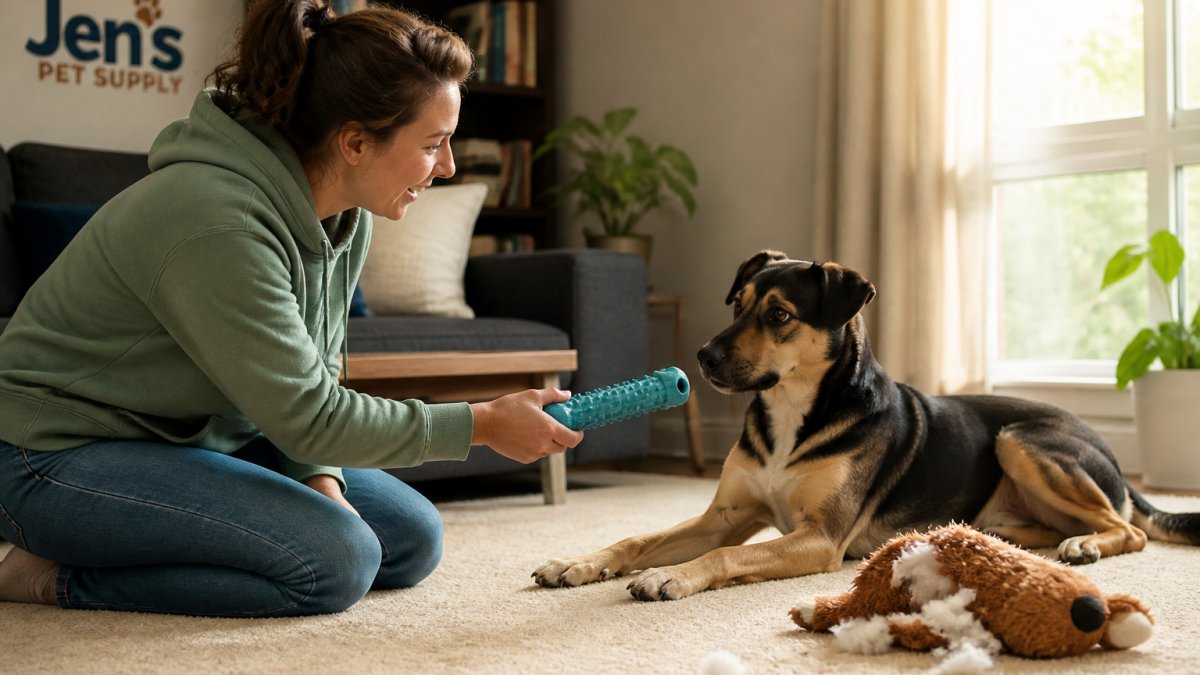
When Destruction Is Not About the Toy
If your dog destroys toys only when left alone, destroys door frames or blinds alongside toys, drools, paces, or vocalizes before you leave, the behavior may be part of separation-related distress rather than a chewing problem. Redirecting toys will not fix that.
For age-specific redirects: puppies under 7 months need teething outlets and constant supervision; adolescents around 6 to 18 months need more exercise and training reps than adults; adult dogs with a sudden new destruction habit should see a vet to rule out pain or dental disease before you assume it is behavioral.
Best Toys for Dogs That Destroy Toys: Match Material to Chewing Intensity
The best toys for dogs that destroy toys are built from materials that match how hard your dog chews. Soft fabric suits gentle mouths.
Here's how to match toy type to your dog:
| Toy Type | Best For | Watch Out For |
|---|---|---|
| No-stuffing plush | Moderate shredders | Fabric still tears over time |
| Stuffable rubber | Power chewers, chewers who need enrichment | Check size against your dog's weight |
| Hard rubber chew toys | Heavy chewers | Skip if your dog has worn or broken teeth |
| Interactive moving toys | Bored dogs, high-energy breeds | Not a chew toy, supervise use |
For serious power chewers, the Dog Toy For Aggressive Chewers No Stuffing Crinkle Plush 3-in-1 Elephant is designed for destructive chewers, with tear-apart layers that reveal a bouncy ball inside.
The KONG Extreme treat-stuffing toy is made of KONG's ultra-durable black rubber formula.

Toy Safety, Ingestion, and When to Call Your Vet
Toy safety matters as much as toy choice. Any toy can come apart, and swallowed pieces can cause a blockage.
Watch out: squeakers, stuffing, rope fibers, and plastic eyes are the most common swallowed toy parts.
Call your vet right away if you notice:
- Vomiting or repeated gagging
- Refusing food or water
- Loose stool or straining with nothing produced
The AVMA's guidance on pet emergencies recommends calling your veterinarian or an emergency clinic as soon as you suspect your dog ate something dangerous.
Remove any toy once it shows cracks, tears, or missing pieces. Keep a vet-approved pet first aid kit on hand in case a dog ingests toy pieces or suffers a minor injury.
Size matters too. The ASPCA's pet toy safety tips advise choosing toys large enough that your dog can't swallow them whole.
Shop Chew Toys Built for Destructive Chewers
Destruction isn't a character flaw. It's a chewing need looking for the right target.
Jen's Pet Supply carries durable chew toys, no-stuffing plush toys, and interactive balls for dogs that tear through everything else, across a range of prices.
Start with a toy matched to your dog's chewing intensity, keep a first aid kit nearby, and rotate the stash to keep boredom at bay.
Get started with Jen's Pet Supply and give your dog a toy that survives the week.
Frequently Asked Questions
Why does my dog destroy toys but not others?
Dogs usually target toys that match their preferred play style. A dog that likes to shake and rip goes after plush toys with stuffing because the fabric gives way fast. A dog that likes to gnaw leaves soft toys alone and works on rubber instead. Notice which toys die first and what your dog does right before the damage: shaking, pouncing, or steady chewing. That pattern tells you which material and construction to buy next, and which toys to keep out of reach.
Should I take away a toy when my dog starts shredding it?
Yes, and the earlier the better. The moment teeth find a seam or stuffing appears, swap the toy for an appropriate chew toy instead of waiting for the toy to come apart. Letting a dog finish the job teaches that ripping fabric is the reward. Removing the toy calmly and offering an alternative keeps the play session going without rewarding destruction. Inspect toys regularly and throw out anything with loose stuffing, exposed squeakers, or torn seams before your dog swallows a piece.
What toys are safest for dogs that destroy their toys?
Look for toys built for power chewers: thick rubber, reinforced stitching, and no loose stuffing. The KONG Extreme Treat-Stuffing Toy is made from KONG's ultra-durable black rubber formula and is available in five sizes, so you can choose one suited to your dog. Stuffing it with treats or peanut butter turns chewing into problem solving. The no-stuffing 3-in-1 elephant toy from Jen's Pet Supply has tear-apart layers for dogs that like to rip, with a bouncy ball hidden inside instead of stuffing.
When should I ask a veterinarian or trainer about destructive chewing?
Get help if your dog chews walls, furniture, or door frames, if destruction happens mainly when you leave, or if your dog has swallowed toy pieces. A veterinarian can rule out dental pain or digestive issues, and a trainer or veterinary behaviorist can assess separation-related anxiety. Also seek guidance if a training plan shows no improvement after a few weeks of consistent supervision, redirection, and appropriate toys. Bring notes on when and where the chewing happens.
