

Quick Summary
The best lightweight carriers for senior cats are a backpack-style carrier that keeps your hands free, a wheeled carrier that removes most lifting, and a soft tote for short trips. Choose by your cat's size and mobility and by how comfortably you can carry the loaded weight, since the combined load matters more than the empty weight.
- The Ultralight Pro Front-Facing Pet Backpack Carrier weighs 3 lbs empty and has a 15 lb maximum pet weight.
- The Breezy Wanderer Fur-Free Pet Tote Bag is the lightest option by listed weight at 1.19 lbs, suited to short trips.
- Weigh the carrier with a bed, water bottle and your cat inside before a long trip to know the real load.
- Measure your cat and compare against the carrier's interior dimensions, not its exterior size, and size up if unsure.
- Ask your veterinarian whether your cat's mobility or pain level calls for a specific carrying style.
Table of Contents
- Why Weight Matters More for Senior Cats
- How We Chose These Five Lightweight Carriers
- Quick Comparison: Five Lightweight Carriers at a Glance
- 1. Ultralight Pro Front-Facing Pet Backpack Carrier
- 2. Rolling Rover Airline Compliant Expandable Wheeled Pet Carrier
- 3. Quilted Companion Pet Carrier - Comfortable
- 4. Breezy Wanderer Fur-Free Pet Tote Bag
- 5. Kangaroo Pouch Pet Carrier with Breathable Mesh
- Matching a Carrier to Your Senior Cat's Needs and Your Own
- Choose Your Senior Cat's Carrier and Plan Your Next Vet Visit
- Frequently Asked Questions
Lightweight Cat Carriers for Senior Cats: Top 5 Picks
Choosing a lightweight carrier for a senior cat is about more than the number on the scale. An older cat often moves more slowly, may have stiff joints, and can find a long trip stressful. At Jen's Pet Supply, we look for carriers that are light enough for you to carry comfortably, easy to load and unload, and roomy enough for your cat to settle in. This guide covers the five lightweight options we would consider first, along with how to match a carrier to your cat and your own strength.
Quick Picks:
- Best Backpack Style: Ultralight Pro Front-Facing Pet Backpack Carrier, at 3 lbs and hands-free to carry
- Best Wheeled Option: Rolling Rover Airline Compliant Expandable Wheeled Pet Carrier, for owners who prefer to roll rather than lift
- Best Soft Tote: Breezy Wanderer Fur-Free Pet Tote Bag, at 1.19 lbs for short trips
Why Weight Matters More for Senior Cats
A carrier's empty weight is only half the equation. What your back and shoulders actually feel is the combined weight of the carrier plus your cat, and for a senior cat, that total matters more than the spec sheet suggests. A 12-lb cat in a 3-lb backpack is a 15-lb load on one shoulder; the same cat in a 1.2-lb tote is a 13.2-lb load in one hand. Over a parking lot, up a flight of stairs, or across a clinic lobby, that difference compounds.
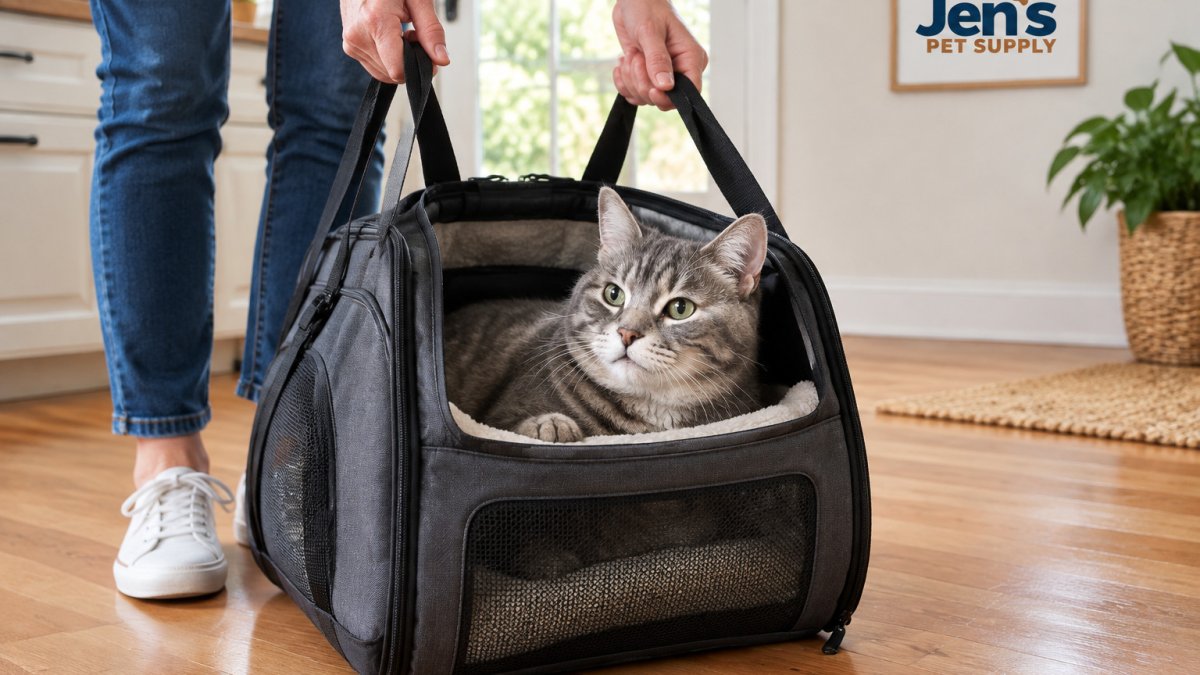
Age changes the math on both sides of the handle. Older cats commonly deal with osteoarthritis, muscle loss, and reduced flexibility, all of which affect how much handling they tolerate and how much space they need to lie down comfortably. The American Veterinary Medical Association and Cornell University College of Veterinary Medicine both note that senior cats often hide pain and stiffness, so a cat that "seems fine" in a carrier may still be uncomfortable being jostled or compressed. A lighter carrier reduces the jostling you transmit through the handle, and a carrier with a firm, flat floor lets a stiff cat bear weight evenly instead of sliding into a corner.
Weight also interacts with how you carry. A backpack with padded shoulder straps and a chest strap distributes load across your torso, which most owners find easier on the lower back than a single-hand tote. A wheeled carrier removes almost all lifting except at curbs and stairs. A soft tote is the lightest option but concentrates the load in your grip, which is the wrong trade-off if you have limited hand strength.
Watch out: a carrier listed as "lightweight" can still be heavy once you add a bed, a water bottle, and a cat, weigh the loaded carrier at home before a long trip so you know what you're actually lifting.
When in doubt, ask your veterinarian whether your cat's mobility or pain level calls for a specific carrying style, and whether a short trial run at home is appropriate before a longer trip.
How We Chose These Five Lightweight Carriers
We compared the carriers in our catalog on listed weight, interior size, ease of carrying, ventilation, and entry design. We also considered whether each carrier suits the way older cats travel: short vet visits, longer car rides, or the occasional flight. Where a listing gave a maximum pet weight, we noted it, since a carrier that is too small for your cat will be uncomfortable regardless of how light it is.
These picks reflect the specifications in each product listing. Check the listing for current details before you buy, and measure your cat before choosing a size.
Quick Comparison: Five Lightweight Carriers at a Glance
| Carrier | Starting Price | Empty Weight | Max Pet Weight | Best For |
|---|---|---|---|---|
| Ultralight Pro Front-Facing Pet Backpack Carrier | $80.00 | 3 lbs | 15 lbs | Hands-free carrying |
| Rolling Rover Airline Compliant Expandable Wheeled Pet Carrier | $149.99 | Not listed | Not listed | Rolling instead of lifting |
| Quilted Companion Pet Carrier - Comfortable | $54.99 | 1.18 to 1.33 kg (size dependent) | 10 to 20 lbs (size dependent) | Soft, padded travel |
| Breezy Wanderer Fur-Free Pet Tote Bag | $70.00 | 1.19 lbs | 13.2 lbs | Lightest option for short trips |
| Kangaroo Pouch Pet Carrier with Breathable Mesh | $34.99 | Not listed | Not listed | Front-carry with paws free |
Starting Price
1. Ultralight Pro Front-Facing Pet Backpack Carrier
This is the lightest option on our list at 3 lbs, and it carries hands-free. If you want a similar carrier that suits longer trips, see the Air Pup Airline Pet Travel Carrier as an alternative. Padded shoulder straps and a back panel spread the weight, which makes it practical for city walks, vet visits, and short trips. The listing gives a maximum pet weight of 15 lbs, and it is designed to fit under most US airline seats when laid flat.
The listing notes that the sturdy base and breathable mesh create a resting spot once you set the carrier down. Mesh ventilation panels and an interior safety tether help keep your cat calm and secure.
Best for: owners who want both hands free and a carrier that doubles as a place to rest. Skip if: your cat is heavier than 15 lbs.
2. Rolling Rover Airline Compliant Expandable Wheeled Pet Carrier
If lifting is the main problem, a wheeled carrier removes most of it. The Rolling Rover has a double telescopic handle, and its wheels can be removed if you would rather carry it. Its expandable sides and mesh top give your cat a wide view, and a built-in safety leash prevents escapes when the door is open. You can also compare the telescopic-handle rolling carrier to see how it handles for pulling and transport. The soft sides compress to fit under a seat for airline travel.

Measure your cat before ordering, and check the product page for the carrier's exact dimensions and weight figures.
Best for: owners who prefer rolling a carrier through airports or along sidewalks. Skip if: you need a carrier you can lift easily with one hand on a staircase.
3. Quilted Companion Pet Carrier - Comfortable
The Quilted Companion is built for comfort on longer trips. It has quilted siding, an extra-soft bed, and a removable fleece pad that the listing says is machine-washable. It comes in three sizes, and the largest holds pets up to 20 lbs. Built-in straps on the bottom and one side can help secure it to a seatbelt in a car.
Best for: owners who want a padded, cushioned carrier for car and plane travel. Skip if: your cat needs a rigid frame to stay upright when you set it down on a slope.
4. Breezy Wanderer Fur-Free Pet Tote Bag
At 1.19 lbs, this is the lightest carrier in the set by listed weight. Its seamless construction resists pet hair, and the mesh panels offer two levels of airflow, letting your cat look out or stay fully enclosed. The listing gives a maximum pet weight of 13.2 lbs, which suits smaller senior cats. It includes a safety tether, a side pocket, and a waterproof pad.
Because it is a tote rather than a rigid box, it works best for short trips where your cat is calm and the bag will not be jostled for long periods. Keep an eye on how your cat settles inside, especially if mobility is limited.

Best for: short trips and light errands with a smaller senior cat. Skip if: your cat is large or needs a firm floor for long rides.
5. Kangaroo Pouch Pet Carrier with Breathable Mesh
The Kangaroo Pouch is a front-carry design with holes for paws and tail, so your cat is held close to your body with its legs free. At $34.99, it is the least expensive option here. The breathable mesh is easy to wipe clean, which matters if a cat has an accident on the way. The listing describes it for high-traffic areas, public transportation, and outdoor use, and notes that it keeps both hands free.
The listing does not give a weight or size range, so confirm the fit for your cat before buying. A front pouch is a poor match for a cat with significant joint pain, since the cat must be lifted into it.
Best for: owners who want a budget-friendly, hands-free carry for a cat that tolerates being held. Skip if: your cat has arthritis or struggles to be lifted.
Matching a Carrier to Your Senior Cat's Needs and Your Own
Start with how your cat moves, not just how much it weighs. A senior cat with arthritis or stiffness often does better with a low entry point and a wide door, so it can step in rather than be lifted over a lip. A cat with balance issues needs a carrier that stays level when set down, a soft-sided bag that slumps to one side is harder for a stiff cat to stand in than a carrier with a firm base. Between trips, a cat exercise wheel can help keep an active senior cat moving at home. And a cat that is painful to handle may do best in a carrier with a top opening or a removable top, so you can lower it in from above instead of pushing it through a small end door.

Fit is more than weight capacity. Measure your cat from nose to tail base and from floor to the top of the head, then compare those numbers to the interior dimensions, not the exterior ones. Look for enough usable floor area for your cat to lie down fully stretched out, and enough height to stand without crouching. A carrier that meets the maximum weight but leaves no room to turn around will be uncomfortable on a longer ride. For a cat with limited flexibility, add a couple of inches of buffer to each measurement.
Loading and unloading deserve their own check. A reluctant cat is easier to load through a wide top opening than through a narrow end door, and a cat that resists being lifted is easier to slide in on a flat floor than to lower into a deep bag. If your cat is painful to pick up, practice at home with the carrier open and a favorite blanket inside before you need it for a vet visit.
Then factor in your own carrying ergonomics. A backpack with padded shoulder straps and a chest strap keeps the load balanced and leaves your hands free; a wheeled carrier spares your shoulders but needs a smooth surface; a tote is lightest but puts all the weight in one hand. If you have limited grip strength or balance concerns, choose the option that matches your body, not just your cat's.
Watch out: a carrier that is too small for a senior cat can force it into a crouched posture for the whole trip, which is harder on stiff joints, size up rather than down when you're between sizes.
If your cat has significant mobility loss or pain, talk with your veterinarian about safe transport and whether a carrier or an alternative setup is the better fit for your cat's condition.
Choose Your Senior Cat's Carrier and Plan Your Next Vet Visit
Pick the carrier that fits your cat's size and your own ability to carry it, then do a short practice run at home with the door open so your cat can explore. Leave a soft blanket inside and offer a treat so the carrier becomes a familiar place. When you are ready, browse the full range of Jen's Pet Supply carriers and travel gear to find the right match for your senior cat.
Frequently Asked Questions
What cat carriers do vets recommend?
Veterinarians generally favor carriers that open from the top as well as the front, have a removable top or a fleece pad that can be lifted out, and can be cleaned easily. Many clinics also suggest keeping the carrier out at home so the cat sees it as ordinary furniture rather than a sign of a trip to the clinic. Hard-sided and soft-sided carriers both have supporters, so the best choice depends on the cat's temperament and how often you travel. For senior cats, lightness and a low entry point often matter as much as the carrier's construction, because a heavy carrier adds strain to your own lifting and a high threshold is hard for a cat with stiff joints to step over.
Are soft-sided or hard-sided carriers better for senior cats?
Soft-sided carriers are usually lighter, fold down for storage, and are easier to carry for long distances, which makes them a common choice for senior cats. Hard-sided carriers offer more structural support and can be easier to clean, and some cats feel more secure inside them. A soft carrier with a firm base and a padded, washable bed often works well for an older cat with joint discomfort, because the base holds its shape while the sides stay light. Whichever type you choose, check that the cat can turn around and lie down comfortably inside it.
How can I make a cat carrier more comfortable for an older cat?
Start by leaving the carrier open in a quiet room with a soft blanket and a few treats inside, so your cat can explore it without pressure. Add a thick, washable pad that cushions the floor, since older cats often have arthritis or sore hips. Place the carrier on a stable surface at a comfortable height for your cat to step into, and avoid forcing the cat in quickly. If your cat has significant mobility problems, a carrier with a front and top opening lets you lower the cat in gently rather than pushing it through a narrow door. Talk with your veterinarian about any pain or mobility concerns before the visit.
Are wheeled cat carriers a good choice for senior cats?
A wheeled carrier can reduce how much you need to lift, which is useful for owners who have their own back or shoulder limits, but the wheels add weight and the carrier can be awkward on stairs or uneven pavement. For a senior cat that is lightweight on its own, a wheeled carrier is most helpful on long walks through airports or clinics. Consider the whole load, including the cat, the carrier and the bag you bring along, rather than the carrier's weight alone.
