

Last Updated: November 13, 2026
Quick Summary
The first signs your senior dog needs arthritis support are often small changes at home, not dramatic limping, rising slowly, hesitating at stairs, or cutting walks short, and knowing these signs your senior dog needs arthritis support helps you act early. Watch for stiffness after rest, a stiff first few steps, slower walks, difficulty rising, stair hesitation, more sleeping, weight shifting, and irritability near the hips. One or two can be normal aging, but several together week after week deserve a vet visit.
- Only a veterinarian can diagnose arthritis; there is no single at-home test, and signs overlap with other conditions.
- Log affected legs, when stiffness is worst, walk length, and video the stiff gait before your vet appointment.
- Keep weight in check, warm up with a slow stroll, shorten walks, add rugs for traction, and raise food bowls.
- Call your vet promptly for sudden lameness, a dragging leg, swelling, pain when touched, or a dog who stops eating.
- Arthritis is manageable, not curable; early support keeps dogs moving and protects quality of life.
Table of Contents
- Early Signs of Arthritis in Dogs
- Symptoms of Arthritis in Dogs' Hind Legs
- How to Diagnose Arthritis in Dogs
- How to Help a Dog with Arthritis at Home
- When to Seek Veterinary Care
- Frequently Asked Questions
Early Signs of Arthritis in Dogs
The first signs your senior dog needs arthritis support are often small changes at home, not dramatic limping, rising slowly, hesitating at stairs, or cutting walks short, and knowing these signs your senior dog needs arthritis support helps you act early. Research published in a PLOS ONE study on how owners and vets recognize osteoarthritis found some dogs show sudden lameness after exercise while others decline so gradually it's mistaken for normal aging.
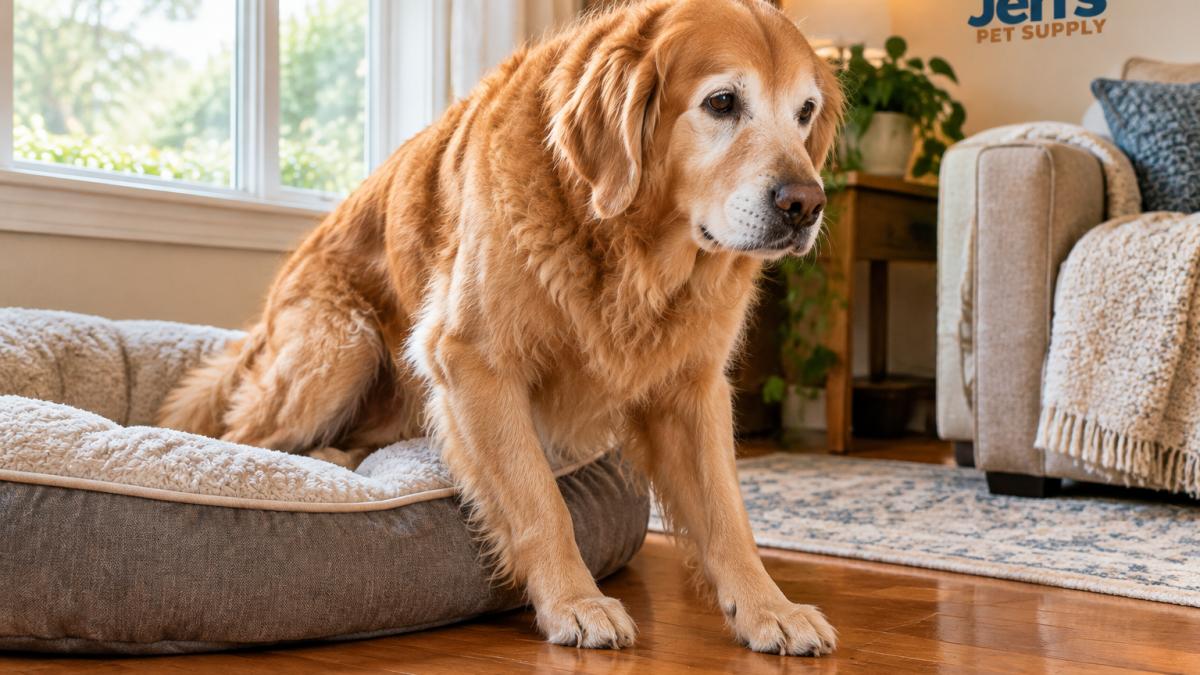
Watch for stiffness after rest, a stiff first few steps, slower walks, difficulty rising, hesitation on stairs, more sleeping, shifting weight off one leg, and irritability near the hips. A warm, supportive bed helps, our K H Pet Bed Warmer is thermostatically controlled with a soft surface that eases pressure on sore joints.
Here are the early warning signs to watch for, and when a cluster of them deserves a vet visit.
| Sign | What it looks like |
|---|---|
| Stiffness after rest | Stiff first few steps after lying down |
| Slower walks | Walks cut short or pace reduced |
| Difficulty rising | Rising slowly, especially in the back end |
| Stair hesitation | Pausing or hesitating at stairs |
| More sleeping | Noticeably more time resting |
| Weight shifting | Shifting weight off one leg |
| Irritability near hips | Snapping or reacting when hips are touched |
| When to act | Several signs together, week after week |
Symptoms of Arthritis in Dogs' Hind Legs
Hind-leg arthritis shows as weakness and stiffness in the back end: slow rocking to rise, circling before lying down, skipping jumps, pausing on stairs, choppy steps, hunched posture, joint swelling, pain when handled, and muscle loss.
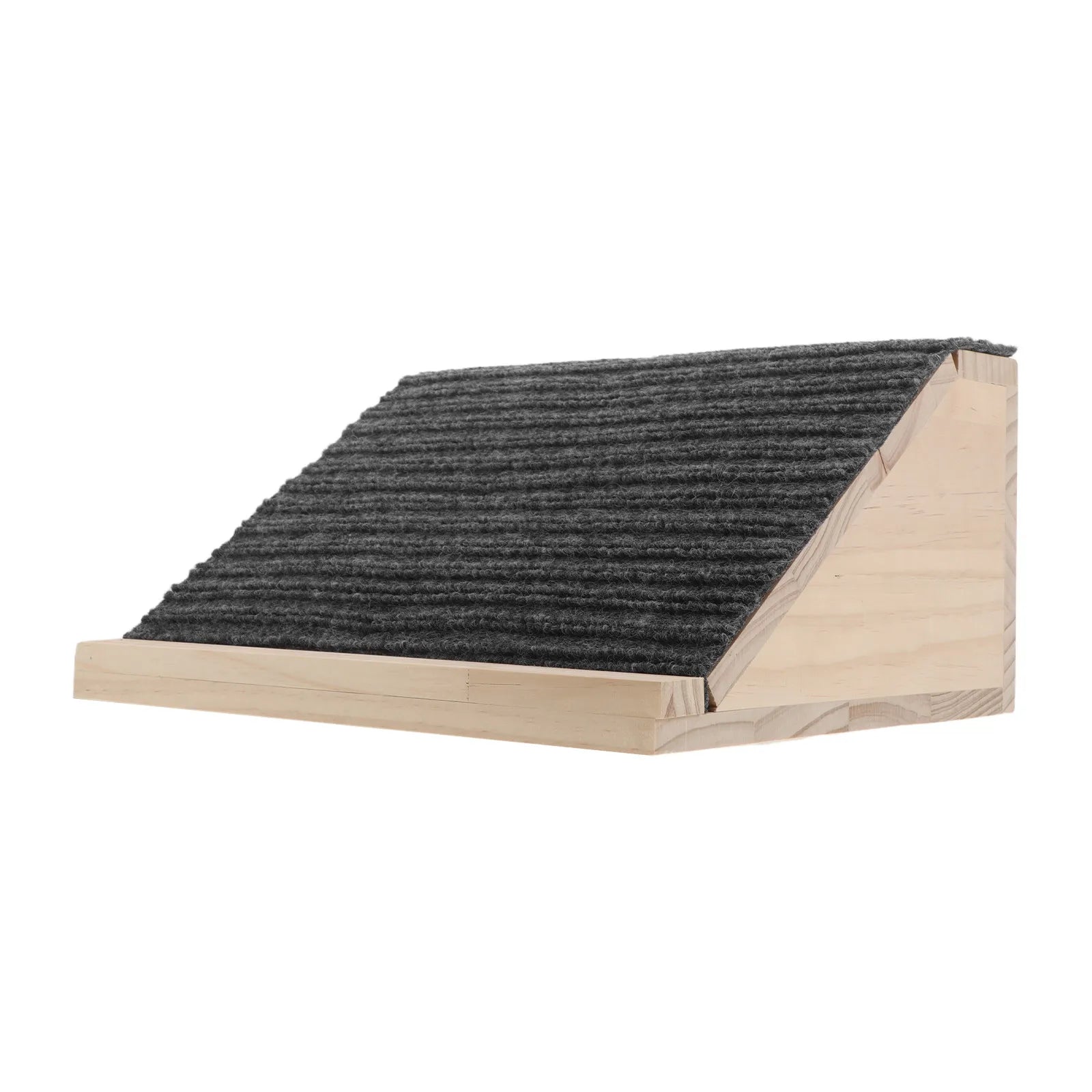
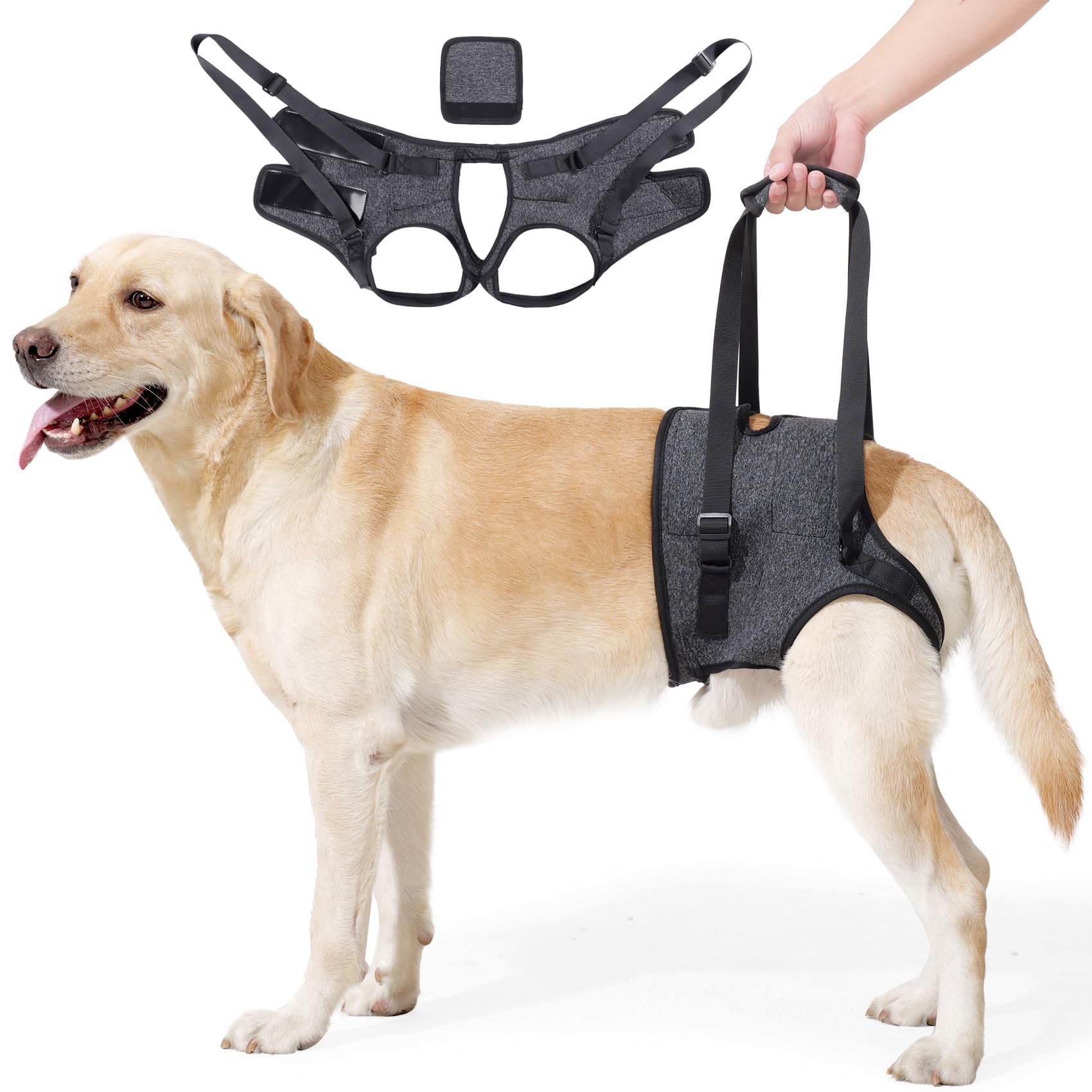
Our adjustable dog lift harness supports weak rear legs without straining joints, and our dog knee brace offers adjustable support during recovery from lameness or a suspected torn ligament. Our wooden pet ramp has a gentle incline and holds up to 154 lbs, removing the jump for senior dogs, small dogs, and cats.
How to Diagnose Arthritis in Dogs
Only a veterinarian can diagnose arthritis, there's no single at-home test, and these signs overlap with other conditions.
Before the appointment, log which legs seem affected, when stiffness is worst, how long walks last, which movements are hard, any vocalizing or behavior changes, diet and supplements, and video the stiff gait.
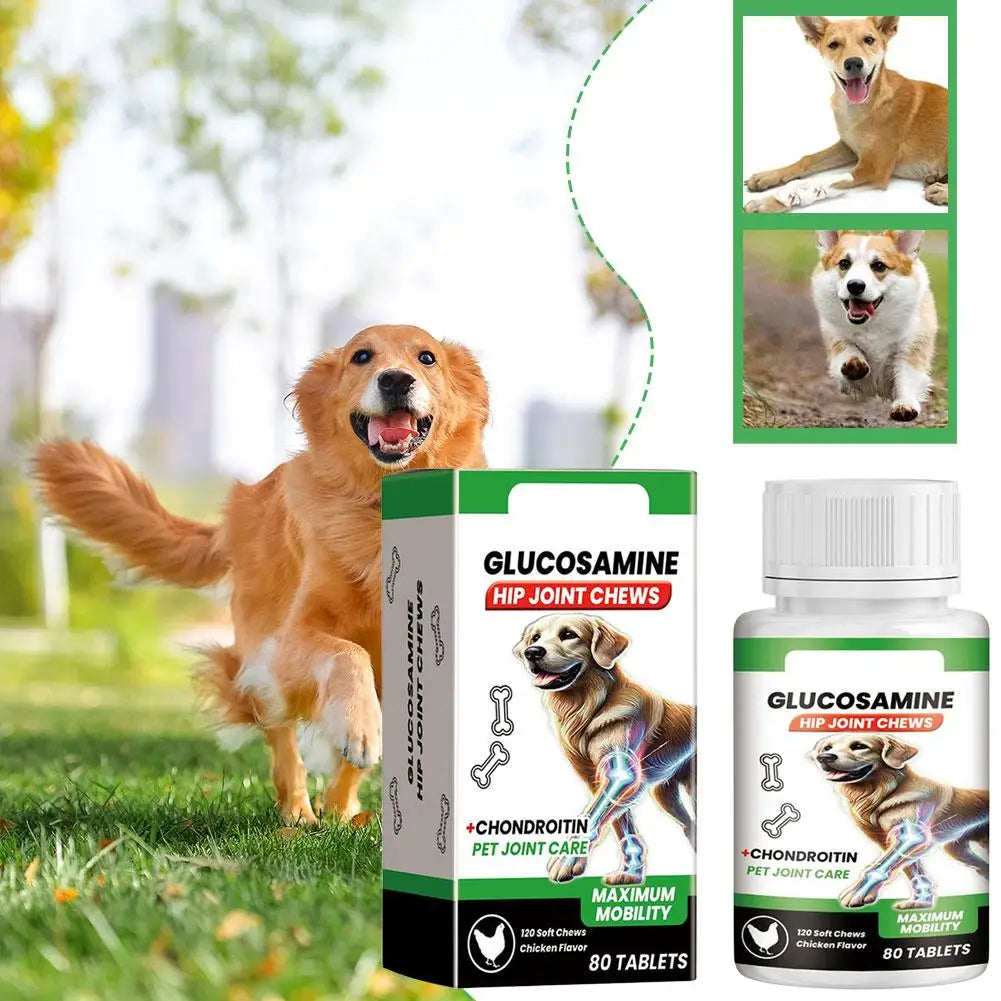
Once diagnosed, our Pet Vet Products glucosamine hip and joint soft chews combine glucosamine, chondroitin, MSM, turmeric, boswellia, devil's claw, and collagen in beef liver flavor, formulated to support healthy joint function and mobility.
How to Help a Dog with Arthritis at Home
Small changes reduce strain: keep weight in check (ask your vet for a target), warm up with a slow sniff-and-stroll, shorten walks and add more of them, choose grass over pavement, add rugs for traction, raise food and water bowls, and keep nails trimmed. Cold, damp days often worsen stiffness. Our orthopedic memory foam dog bed is built for large and medium dogs, with egg crate memory foam that offers orthopedic support, and ramps and steps help dogs avoid jumps onto the couch, bed, and car.
When to Seek Veterinary Care
Call your vet when changes are steady rather than occasional: stiff most mornings, hesitating on stairs daily, or no longer jumping at all. Arthritis is manageable, not curable; early support keeps dogs moving and protects quality of life (Osteoarthritis).
A stiff dog does not have to slow down for good. At Jen's Pet Supply, we stock the everyday gear that helps senior dogs stay comfortable: supportive orthopedic beds, ramps and lift harnesses for weak rear legs, and joint chews for daily mobility support.
Frequently Asked Questions
What are the early signs of arthritis in senior dogs?
Early signs include stiffness after rest, especially morning stiffness, reluctance to climb stairs or jump into the car, slower walks, and a stiff gait. Some dogs show subtle behavior changes like irritability or avoiding touch. Veterinary research describes some dogs showing acute non-weight-bearing lameness in one limb during or immediately after exercise. These signs can be mistaken for normal aging, so track changes and consult your vet for an accurate assessment.
How is arthritis diagnosed in dogs?
A veterinarian typically diagnoses arthritis through a physical exam, observing gait and range of motion, and may use X-rays to confirm joint changes. They will also ask about your dog's history and daily habits. Your vet may recommend blood work to rule out other conditions. Keeping a symptom log of when your dog is stiff or reluctant to move can help your vet make a diagnosis. Early detection allows for better management.
What can I give my senior dog for arthritis?
Your vet can advise whether joint supplements or pain management are appropriate for your dog. At home, provide orthopedic bedding, ramps or stairs to reduce jumping, and keep your dog at a healthy weight. Always consult your vet before starting supplements, as they can interact with other medications. Jen's Pet Supply carries joint supplements and mobility aids for senior dogs, including the glucosamine hip and joint soft chews mentioned above.
