

Quick Summary
A new puppy mainly needs a treat pouch, a few small high-value treats, a fixed-length leash, and a training mat or washable pee pads for house training. These cover most early training, so add other training tools only when a specific goal calls for them.
- Keep treats small and soft so rewards are quick to deliver.
- A fixed-length leash gives steady, predictable feedback for loose-leash practice.
- Keep leash sessions short and reward calm walking.
- Avoid tools that rely on pain or fear; choose reward-based approaches.
- Build your kit around the first behavior you want to teach.
Table of Contents
- Essential Training Tools for New Puppies
- Training Tools for Walking and Leash Work
- Choosing Your Puppy's First Training Kit
- Frequently Asked Questions
Essential Training Tools for New Puppies
A small set of tools handles most early training. For the grooming side of a new-puppy setup, our guide to seven essential grooming tools covers what to pick up alongside your training gear. Start with a treat pouch, a few high-value treats, and a fixed-length leash. Treats do the heavy lifting, so keep them small, soft, and easy to break into pieces. Our Chicken Chips Snack Pack Bundles | Dog Party Favors & Training Treats fit neatly in a pocket for quick rewards. Pair them with a Food dog snack bag pet training bag so your hands stay free.

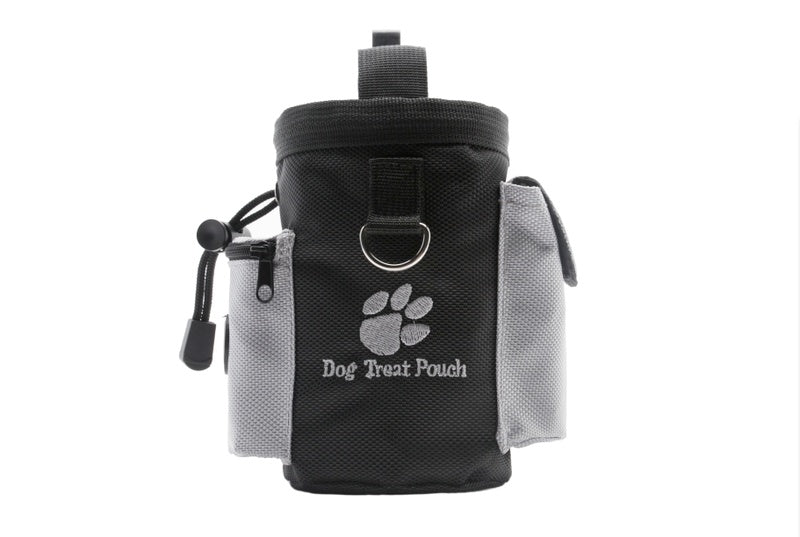
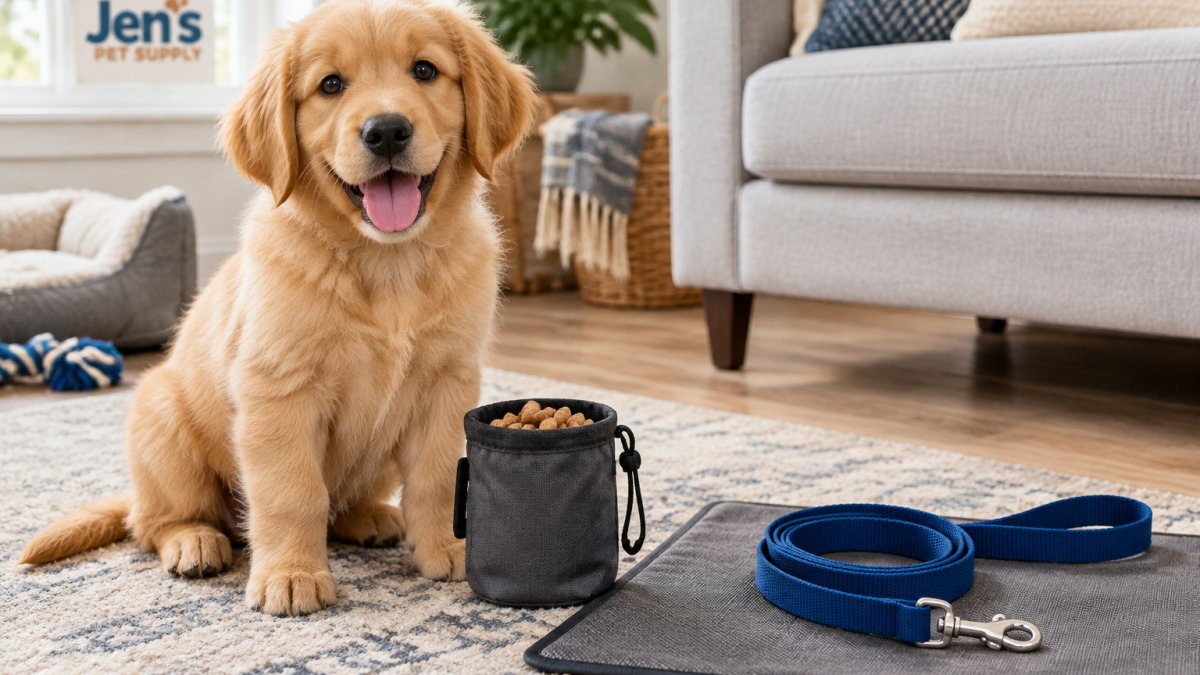
Most early training runs on a handful of basic tools, each with a clear job.
| Tool | Use | Note |
|---|---|---|
| Treat pouch | Holds rewards for quick delivery | Keeps hands free |
| High-value treats | Rewards good behavior | Keep small and soft |
| Fixed-length leash | Steady, predictable leash feedback | Recommended for loose-leash practice |
| Training mat or washable pee pads | House training | Add only as needed |
Training Tools for Walking and Leash Work
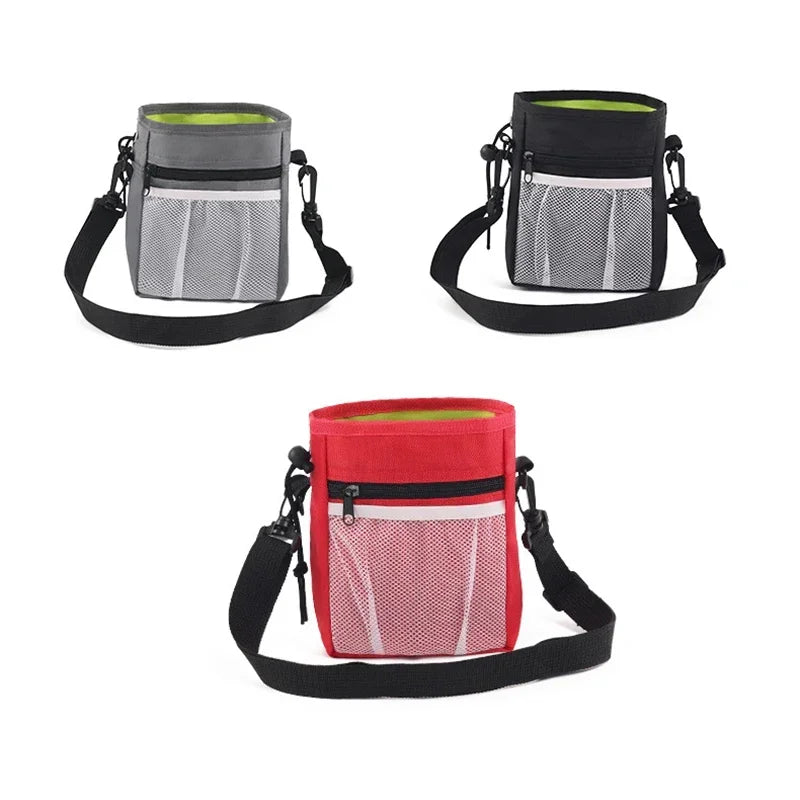
Leash work is where many puppies first learn guidance and control. A fixed-length leash gives steady, predictable feedback, and it is the tool we recommend most for loose-leash practice. If you want a sturdier option, see this durable stainless steel leash with a metal handle for outdoor walks. Keep sessions short, reward calm walking, and avoid tools that rely on pain or fear. A treat pouch for walks keeps rewards within reach so you can pay out treats the moment your puppy checks in. Choose approaches built on reward rather than correction.
Choosing Your Puppy's First Training Kit
Start small: a treat pouch, a few high-value treats, a fixed-length leash, and a training mat or washable pee pads for house training. Add tools only when a specific training goal calls for them. Build your kit around the behavior you want to teach first, and you will spend less and train more consistently.
Ready to build your starter kit? Shop Jen's Pet Supply for treats, leashes, and training gear picked for new puppies.
Frequently Asked Questions
What training tools do new puppy owners actually need?
Most new puppy owners need only a few items: a well-fitting collar or harness, a fixed-length leash, a training pouch, and a supply of small, soft, high-value treats. Those cover the core work of teaching recall, loose-leash walking, and basic cues. Extra gear such as clickers or enrichment toys can help, but they are optional. Start with the essentials and add tools only when a specific training goal calls for them. Products such as the Chicken Chips Snack Pack Bundles and Fish Chips Snack Pack Bundles from Jen's Pet Supply are portable snack packs.
What tools help with puppy biting?
Puppy biting is usually managed with redirection rather than a single device. Keep a soft chew toy within reach, redirect the puppy to it the moment mouthing starts, and reward calm behavior with treats. The eStick Hand-Held Dog Enrichment Target Training Toy from Jen's Pet Supply is a hand-held lick stick that works with soft foods such as peanut butter, yogurt, and wet food. Avoid tools that rely on pain or startle. If biting is intense or persistent, ask your veterinarian or a qualified trainer for guidance.
What equipment should I use to walk a puppy safely?
A flat or round collar or a well-fitted harness, paired with a fixed-length leash, suits most puppies learning to walk. Check that you can fit two fingers under the collar or harness straps and adjust them as the puppy grows. Keep the leash short enough to guide the puppy and supervise every walk. Retractable leashes can let a puppy run ahead and create tangles or injury risk, so they are generally not recommended for early leash training. Use treats from a training pouch to reward the puppy for walking beside you.
